sustainability
FIS points members to government CBAM guidance ahead of January 2027 start
The finishes and interiors trade body has told members that the Carbon Border Adjustment Mechanism applies to importers of relevant goods from January 2027 and has directed them to a package of government information published on 16 October.
The Finishes and Interiors Sector (FIS) has told its members that the UK Carbon Border Adjustment Mechanism (CBAM) will apply to importers of relevant goods from January 2027 and has pointed them to a package of government information published on 16 October.
The trade body said it had been monitoring the government's plans for CBAM and their impact on members. It said clarity had been missing in several areas, including whether a business needs to register, how to identify eligible goods, monitoring and reporting obligations and how to calculate liability.
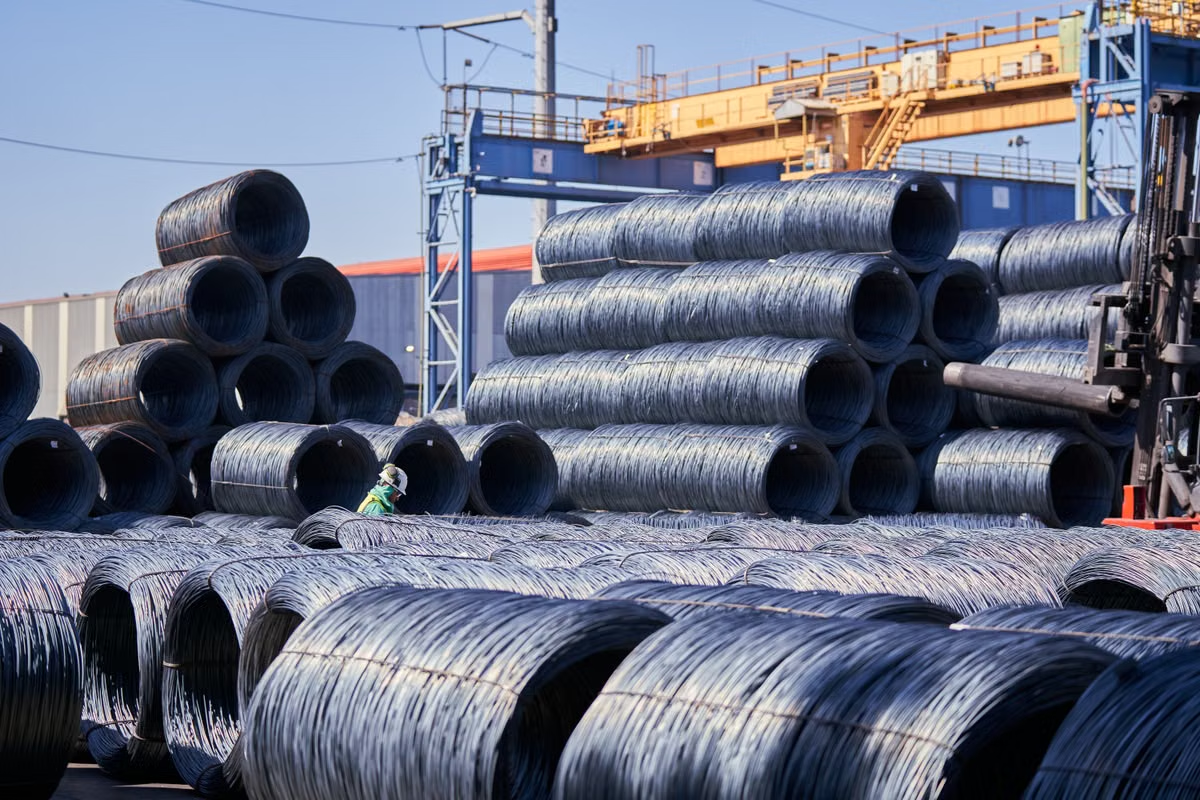
According to GOV.UK, CBAM will tax embodied emissions in specific carbon-intensive goods imported into the UK. It covers goods from the aluminium, cement, fertiliser, hydrogen, and iron and steel sectors. HM Treasury's policy summary describes the mechanism as placing a carbon price on the emissions embodied in imports of specified goods.
FIS said its members are drawn from contractors, manufacturers and distributors of ceilings, steel framing systems, operable walls and partitions, among other products. It describes itself as the not-for-profit representative body for the UK finishes and interiors sector, which it puts at £12bn in annual turnover with a workforce of 250,000 people and more than 600 members.
The 16 October package
FIS said the Financial Secretary to the Treasury made a written ministerial statement announcing the publication of illustrative CBAM rates, the default emissions values to be used in 2027 and 2028, and confirmation of an intention to move to country-specific default values from 2029.
HM Revenue & Customs (HMRC) said the illustrative rates are based on the average UK Emissions Trading Scheme price from July to September 2026. The government said they should not be read as forecasts or as the rates that will apply when CBAM liability begins. The rates that will generate a liability from 1 January to 31 March 2027 will be published before the end of 2026, HMRC said.
On default values, HMRC's draft force-of-law notice said the UK figures have been set on a trade-weighted average basis, using EU data, with a 10% markup applied in all sectors except fertiliser. The values will be in force from 1 January 2027 to 31 December 2028. From 2029 the UK will move to one default value per CBAM good per country.
Registration
While FIS said clarity on whether a business needs to register has been missing, HMRC guidance on GOV.UK sets out a threshold. It says a business must register if it expects to import CBAM goods worth £50,000 or more within the next 30 days. A backward-looking test checks whether £50,000 or more of CBAM goods have been imported in the previous 12 months. Goods imported before 1 January 2027 do not count towards the threshold.
Registration for CBAM will open on 1 January 2028, according to GOV.UK. Importers who do not need to register will still need to keep records to prove they are not liable for the tax.
Webinars and further support
FIS said the government had run three webinars to support implementation: a general CBAM overview on 1 October 2026, a session on monitoring, reporting and verification on 19 October, and one on carbon price relief on 26 October. Recordings of each are available, it said.
The trade body also said the Construction Products Association had produced a summary of the CBAM publications to date, including the audiences likely to have a primary interest in each.
FIS invited members with questions about CBAM to contact James Parlour or Flavie Lowres at the organisation.
The first CBAM rates to generate a liability, covering 1 January to 31 March 2027, are due to be published before the end of 2026.
On the record: FIS, Construction Products Association
Sources
- FIS (opens in a new tab) (accessed 2026-10-26)
- FIS (opens in a new tab) (accessed 2026-10-26)
- FIS (opens in a new tab) (accessed 2026-10-26)
- HM Revenue & Customs / GOV.UK (opens in a new tab) (accessed 2026-10-26)
- HM Revenue & Customs / GOV.UK (opens in a new tab) (accessed 2026-10-26)
- HM Revenue & Customs / GOV.UK (opens in a new tab) (accessed 2026-10-26)
- HM Treasury / GOV.UK (opens in a new tab) (accessed 2026-10-26)
- HM Revenue & Customs / GOV.UK (opens in a new tab) (accessed 2026-10-26)
This story was researched from the primary sources above and checked against them before publication. Spotted an error? Tell us and we will correct it promptly.