certification
Environment Agency clarifies which waste is suitable for engineering structures
The regulator has updated its deposit for recovery guidance for England, clarifying what material may be used in engineered structures and that waste in attenuation layers must also meet schedule 22.
The Environment Agency has updated its deposit for recovery guidance for England to clarify what waste material is suitable for use in engineering structures, its second change to the guidance this year.
The regulator published the change on 12 November 2026 to its 'Deposit for recovery operators: environmental permits' guidance, which covers how operators apply for a permit and what a waste recovery plan must contain.
Two of the four guides in the collection were amended. The 'Waste recovery plans and deposit for recovery permits' guide now clarifies what material would be suitable when waste is used in engineering structures, the Environment Agency said.
The 'Engineering construction proposals for deposit for recovery' guide was also changed to make clear that waste used to construct an attenuation layer must meet the requirements of schedule 22 of the Environmental Permitting (England and Wales) Regulations 2016.
What the guidance now says
Depending on the waste and the sensitivity of the site, an operator may need to build an attenuation layer across the base and sides of the site to protect soil and water, according to the engineering guide. Only cohesive material may be used for that layer.
The guide also says waste in an attenuation layer must come from a single source or waste type, meet the definition of inert waste, and have a pollution potential no greater than the natural quality of the surrounding geology and water.
A construction quality assurance (CQA) engineer must carry out at least four permeability tests per hectare on the layer, and the people involved in the CQA plan must be independent of both the permit holder and the construction contractor.
The wider regime
The Environment Agency treats depositing waste as a recovery activity only where the operator can show the works could and would have been carried out using non-waste material. Operators who cannot show this must apply for a waste disposal permit instead.
The guidance is aimed at operators planning a new deposit for recovery operation or changes to an existing one. Once a waste recovery plan is approved it forms part of the operator's environmental permit. The charge is set out in table 1.19.1 of the environmental permitting charging scheme.
Earlier changes in 2026
The November update follows an earlier revision to the guidance in May 2026, when the Environment Agency added standard rules SR2024 No 2, covering the use of unbound incinerator bottom ash aggregate (IBAA) in construction, to the guidance's standard rules section. The same update removed a reference to recovering 60,000 cubic metres or less of waste, directing operators to the relevant standard rules instead.
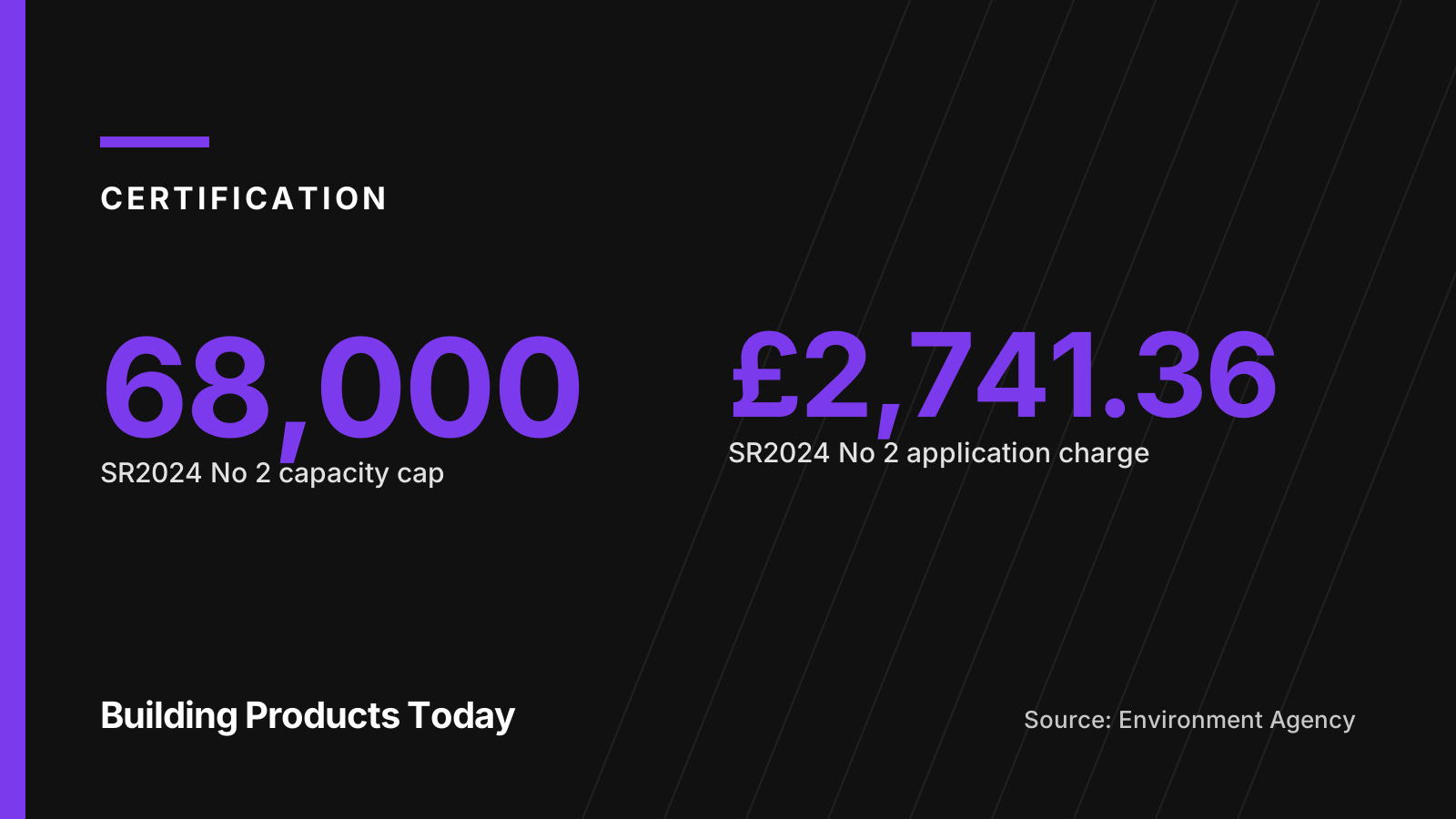
SR2024 No 2 caps a recovery operation at 68,000 tonnes and limits permitted waste to unbound IBAA derived from processed municipal waste incinerator bottom ash, with reference to BS EN 13242. Waste may be stored for no more than six months before use, and a road sub-base of IBAA may be no deeper than 0.7 metres. The activity is barred within 25 metres of a watercourse and within groundwater source protection zones 1 or 2.
A new SR2024 No 2 permit application costs £2,741.36, with an annual subsistence charge of £3,442.28, according to the publication page.
On 2 July 2026 the SR2024 No 2 rules themselves were amended to state that activities should not be carried out within 50 metres of a protected species or habitat the Environment Agency considers at risk.
The guide lists SR2024 No 2 alongside the older SR2015 No 39 rules, published on 1 February 2016 and last updated on 3 April 2019, which allow waste to be stored and used in deposit for recovery activities involving construction, reclamation, restoration or improvement of land. The regulator's standard rules index marks four older SR2010 rules as unavailable for new applications.
Operators unable to comply with the conditions of a standard rules permit or its generic risk assessment must apply for a bespoke waste recovery permit.
The Environment Agency's separate waste suitability guide lists incinerator bottom ash as acceptable for structural fill for building, stabilising slopes, drainage and road construction.
On the record: Environment Agency
Sources
- Environment Agency (GOV.UK) (opens in a new tab) (accessed 2026-11-12)
- Environment Agency (GOV.UK) (opens in a new tab) (accessed 2026-11-12)
- Environment Agency (GOV.UK) (opens in a new tab) (accessed 2026-11-12)
- Environment Agency (GOV.UK) (opens in a new tab) (accessed 2026-11-12)
- Environment Agency (GOV.UK) (opens in a new tab) (accessed 2026-11-12)
- Environment Agency (GOV.UK) (opens in a new tab) (accessed 2026-11-12)
- Environment Agency (GOV.UK) (opens in a new tab) (accessed 2026-11-12)
- Environment Agency (GOV.UK) (opens in a new tab) (accessed 2026-11-12)
This story was researched from the primary sources above and checked against them before publication. Spotted an error? Tell us and we will correct it promptly.